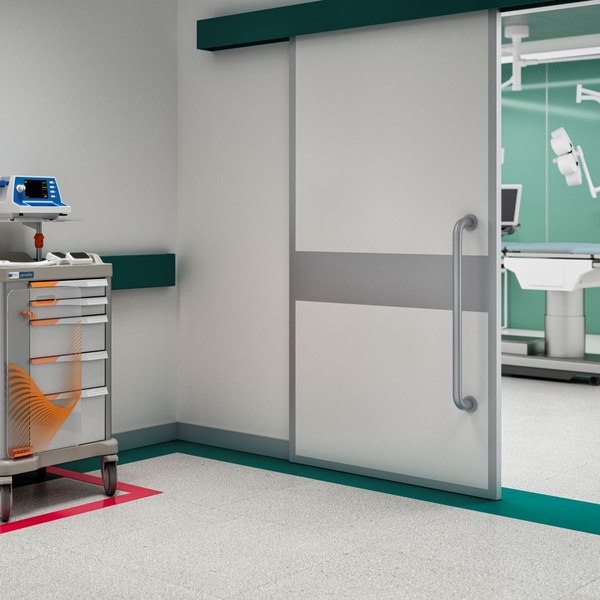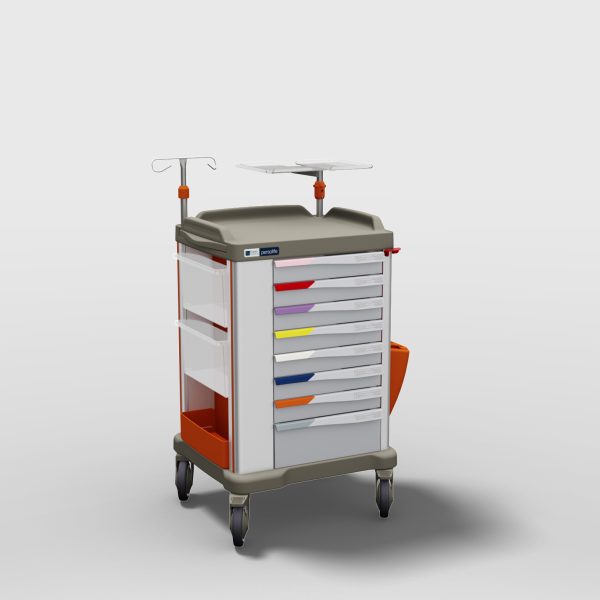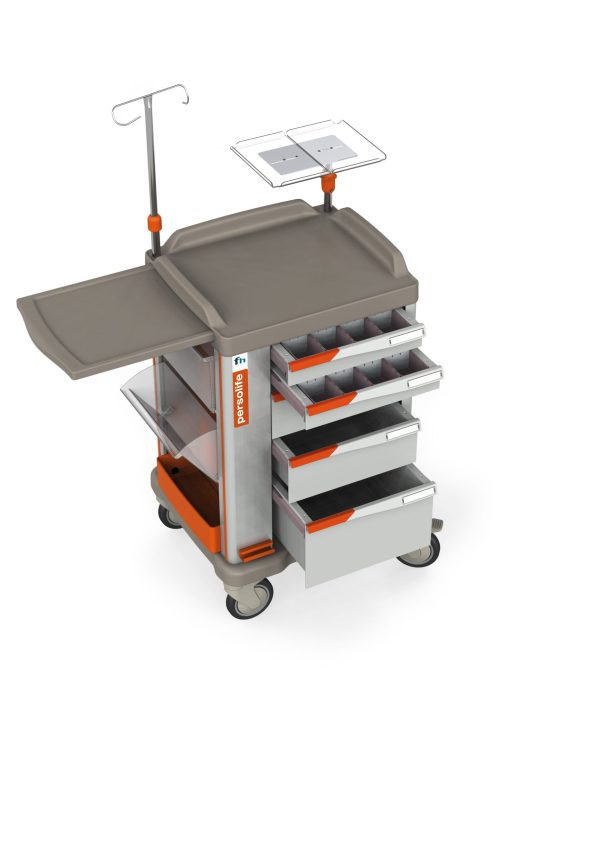
In 2019, Anesthesiology published an analysis of 57,312 witnessed in-hospital cardiac arrests across 538 hospitals: when defibrillation or the first medication is delivered within 2 minutes of the start of resuscitation, survival to discharge is 18%; between 3 and 5 minutes it drops to 15%; between 6 and 8 minutes, to 12.8%. In cardiac arrest, the decisive variable is time, and part of that time is spent physically at the crash cart: finding it, opening it, getting the right item in hand.
A second figure completes the picture. In 2022, an observational study published in the Journal of Emergency Nursing assessed the readiness of resuscitation carts: empty oxygen cylinders in 32% of cases, dead batteries or faulty devices in 16%, wrong-size supplies in 16%, missing, expired or unavailable material in 15%. The most uncomfortable detail is that some of these problems turned up on carts that had reportedly been checked multiple times, by different staff.
Read together, these two figures define the nature of the purchase: a crash cart is not furniture.
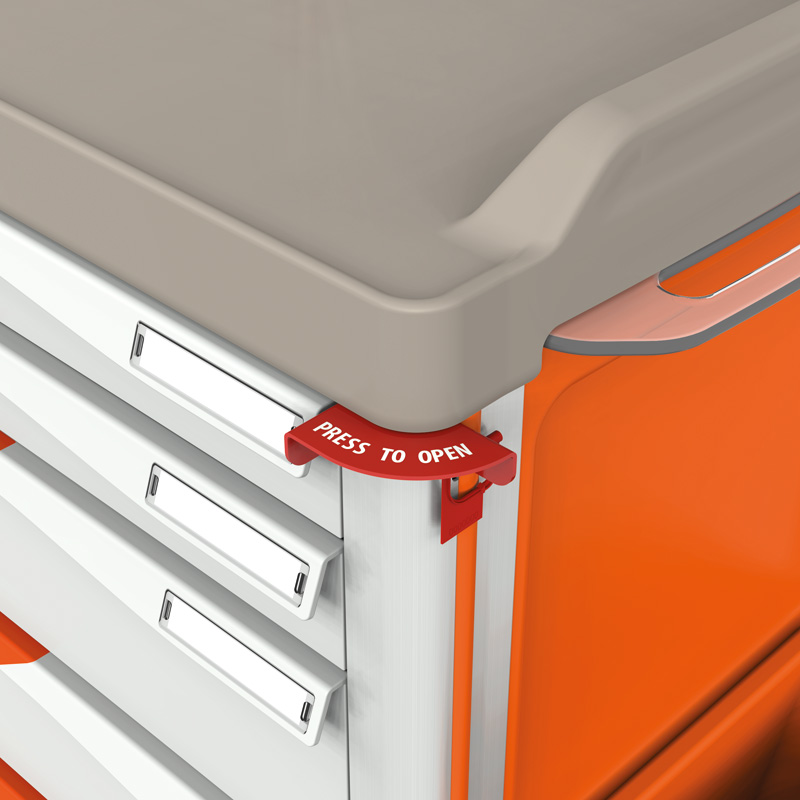
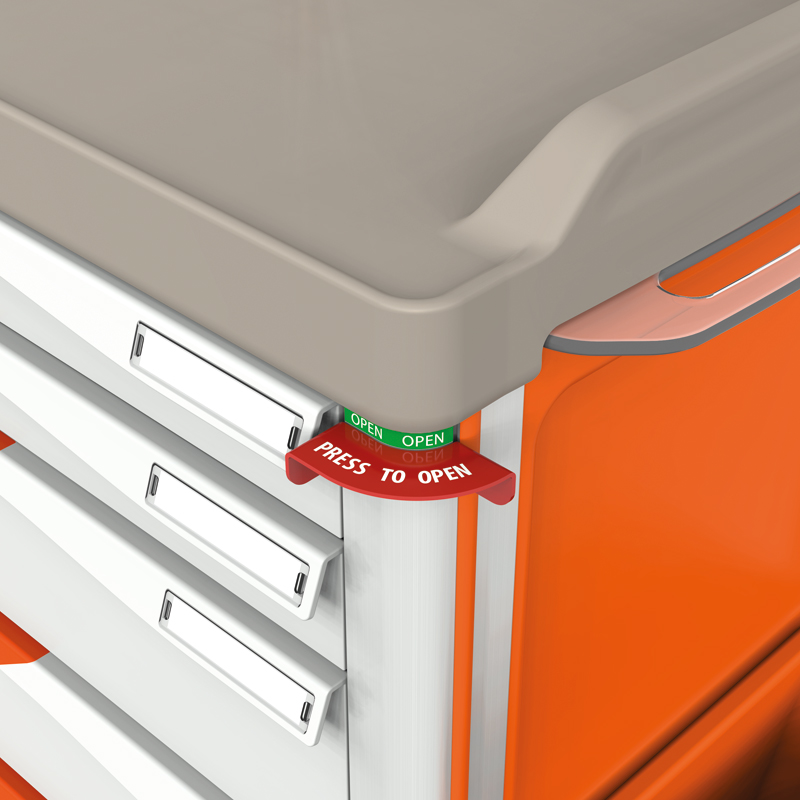
It is a device whose design, from the closure to the seal to the layout of the compartments, affects minutes that the clinical literature links to survival.